Section
ROMAN ERA

1st–4th c. ADRoman era
The Roman period began with the conquering of the Balkan Peninsula by the Romans and the establishing of the province of Thrace. It happened in 46 AD as a part of the Roman expansion campaign in the East direction.
See in the Museum
Many Roman sites have been studied on the territory of the Mines, but the farm complexes and the burial mounds prevailed. The only registered in South Bulgaria watchtower also deserves attention – it was located nearby the village of Pomoshnik. As a result of the archaeological excavations many artefacts have been added to the museum’s collection and some of them have high artistic and exhibition value – golden and silver adornments, bronze and glass vessels, luxury red-lacquer ceramics, an ivory pyxis, etc. They could be seen in the exhibition halls of the museum.
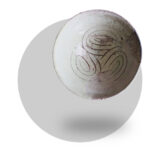
Ceramic cup
Golden earrings
Ceramic lamp
Golden medallion – a cassette for holding a precious stone
Bone hair pin
Golyamata mogila barrow, Madrets
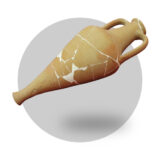
Ceramic amphora-like vessel for incense oils
Glass gutus – a baby feeder
Ceramic cup
Burial pit, covered with tegulae
Stages of archaeological investigation
Burial facilities, covered with tegulae
Ceramic and glass balsamaria
Burial pit, covered with tegulae
Stages of archaeological investigation
Glass lakrimarium and balsimarium
Glass lakrimarium
Glass balsamarium
Burial facilities, covered with tegulae
Urn burial
Ceramic and glass balsamaria
Ceramic and glass balsamaria
Ceramic and glass balsamaria
Bronze strigils
Trizna
Ceramic amphora-like vessels for incense oils
Ceramic vessel with a lid
Word dictionary in the slider
Culture of Builders
The Roman culture is well known around the world – the Romans constructed massive structures of stone and mortar like legion camps along the Danube river, intended for the defense of the limes (border) – Novae (present-day Svishtov), Escus (the village of Gigen, Pleven region), Ratiaria (Vidin), etc, as well as fortified cities in the plains – like Philippopolis (Plovdiv), Augusta Traiana (Stara Zagora), Nikopolis ad Istrum (the village of Nikyup, V. Tarnovo region). They also built impressive infrastructure like roads, road stations, aqueducts, bridges – and finally, inland they established settlements, farm complexes and villas. Gradually the Romans assimilated and integrated the local population (the Thracians) into the vivid ethnic mass of the Empire.
Burial Tradition
The Roman burial traditions are the most distinguishable characteristic of Roman culture. Usually, the dead were buried in mound necropolises comprising of a couple of sepulchers (burial mounds, barrows).
The dead people were inhumated or cremated and laid in urns, simple burial pits, burial chambers, cists, sepulchers.
As a rule, the dead were buried together with grave goods – ceramic, bronze and glass vessels, arms, tools as well as personal belongings – adornments, chests, mirrors, etc. Usually, a coin was left in the grave – the so-called Charon’s obol. The wealthiest mound burials studied on the territory of the Mines are the ones in Kurtova mogila barrow nearby the village of Ovchartsi, Golyamata mogila barrow nearby the village of Mednikarovo, the mound nearby the village of Madrets, etc.
Settlements

The project is funded by NCF“Digital window towards Archaeological Museum
“Maritsa-iztok” Radnevo”
2025
Design by
Studio SFERA, part of
RISK Electronics Ltd.
RISK Electronics Ltd.

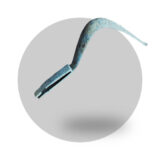
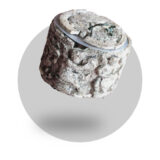
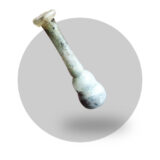 A glass container, like a miniature bottle or ampule, intended for the tears of the mourners.
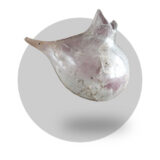
 A glass or ceramic vessels, like a bottle, intended for fragrant oils and liquids, usually put in Roman burials.
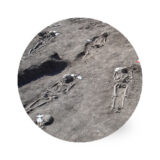 Cemetery, graveyard.
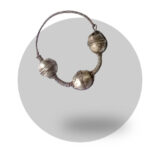 A jewelry like an earring which is larger in size and usually it was attached to the headscarf or the hair of the woman.