Timeline
Explore how old are the most interesting objects in the museum exhibition halls.
Paleontology
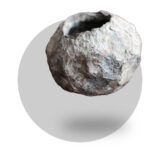
25 million years ago
Fossils of ancient animals
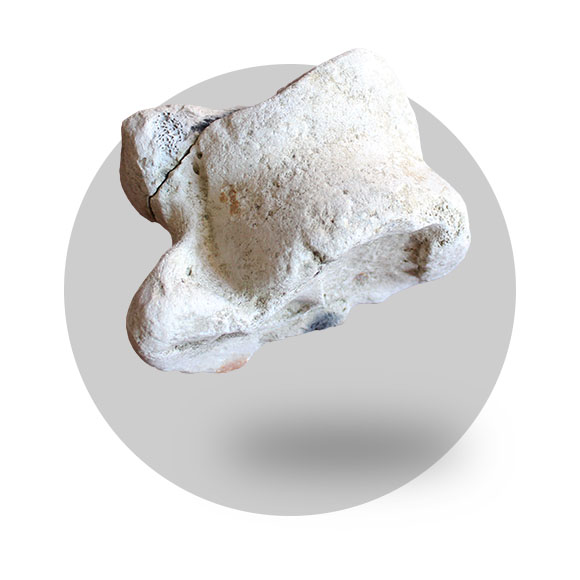
During the coal extraction in the years since the establishment and operation of the mine, fossils of ancient animals have been found at various depths, the formation of which took millions of years.
What ancient animals’ remains are you going to see in the museum?
Prehistory
Neolithic period
Sarnevo
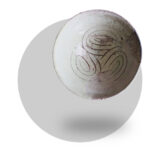
6300/6200 BC – 4900/4850 BC
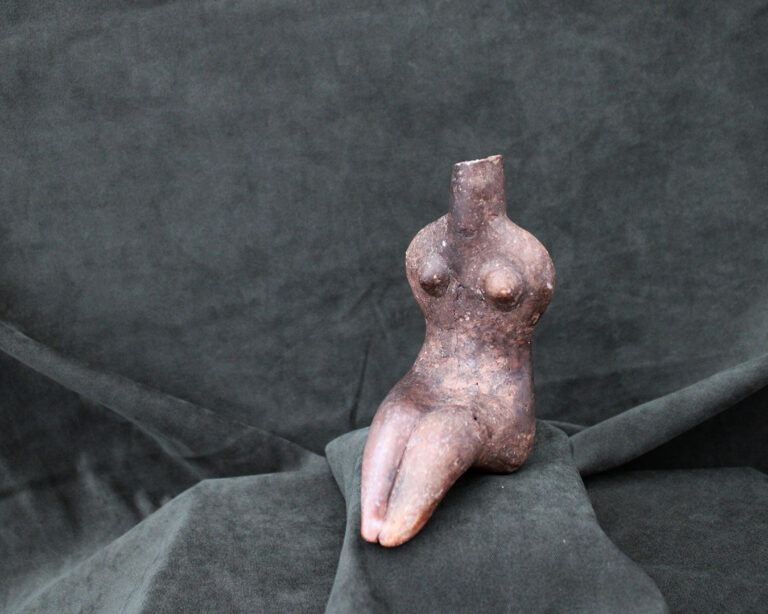
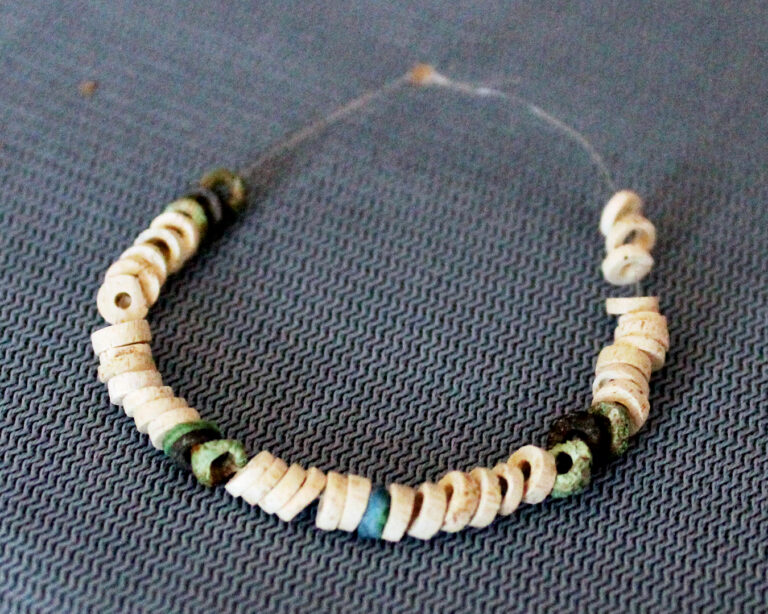
In this late Neolithic site, fragments of more than 20 anthropomorphic female ceramic figurines, zoomorphic figurines, and triangular tables have been discovered, which are indicative of the religious beliefs of the people at that time.
What else did archaeologists discover about the ancient people in Sarnevo?
Chalcolithic period
Sokolitsa River
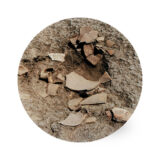
4900/4850 BC – 4100/3800 BC
The village of Gudzhova mogila mound and nearby open settlements show the development of the Sokolitsa river area.
In addition to expensive imported ceramic vessels, there is an artefact made of an exotic material among the findings – a glaucophane schist axe. There are no known deposits of this rock type in the territory of Bulgaria.
Besides communicating with each other, the settlements also traded with the northeastern Balkans.
Bronze Age
Ovchartsi
3200/3150 BC– 1100/1000 BC
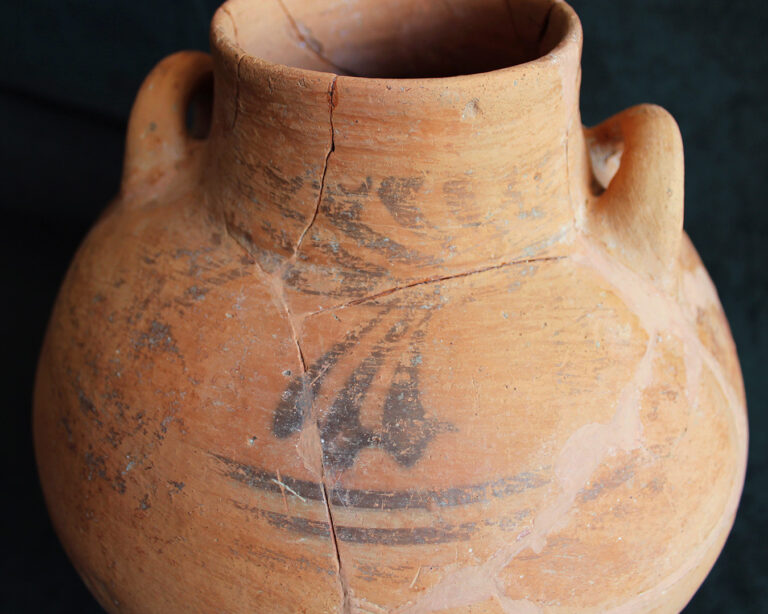
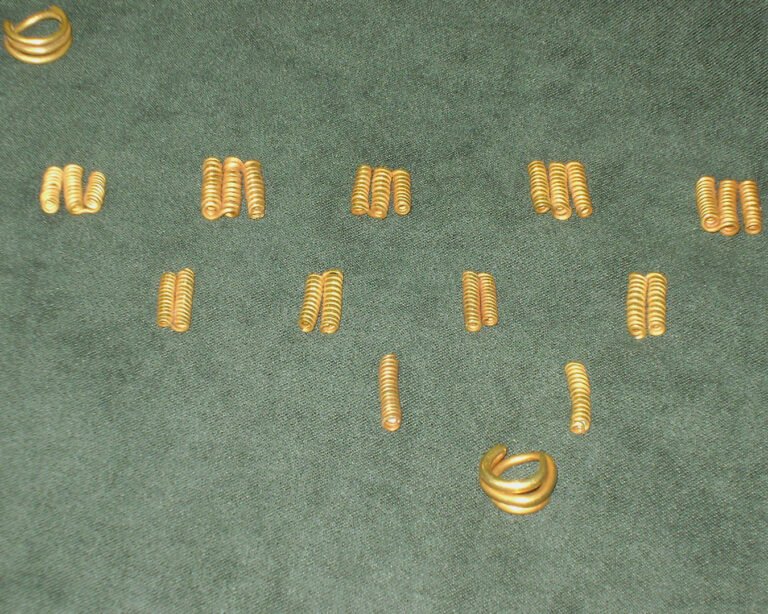
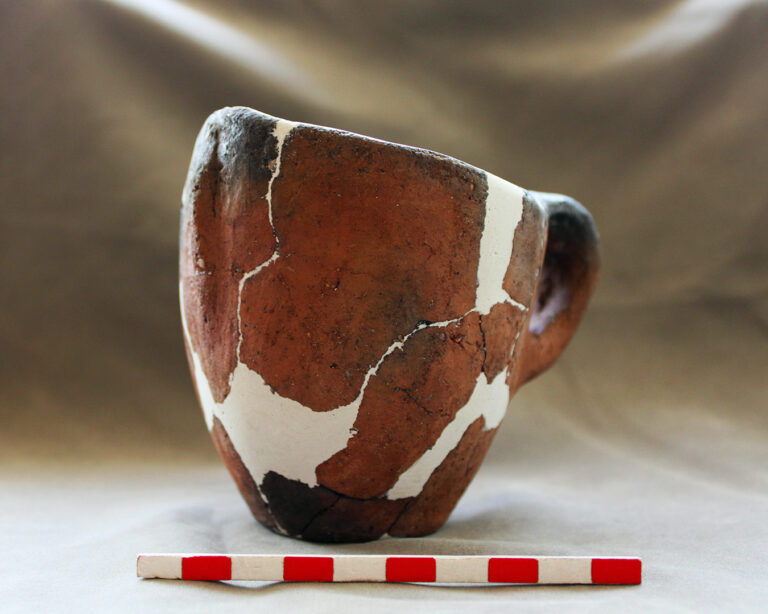
Near the village of Ovchartsi, a mound necropolis consisting of three mounds with graves from the Early Bronze Age has been discovered. In one of them, a woman over 65 years old was buried with interesting grave goods.
Bronze Age
Galabovo
3200/3150 BC – 1100/1000 BC
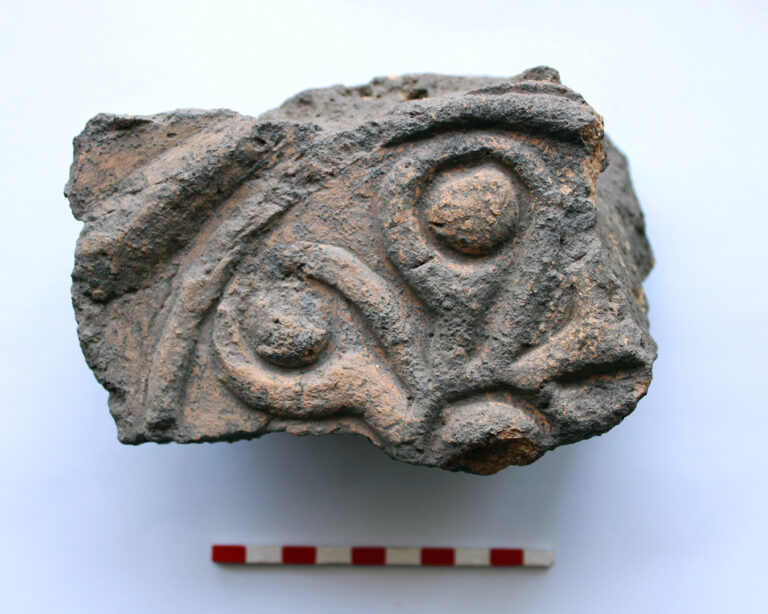
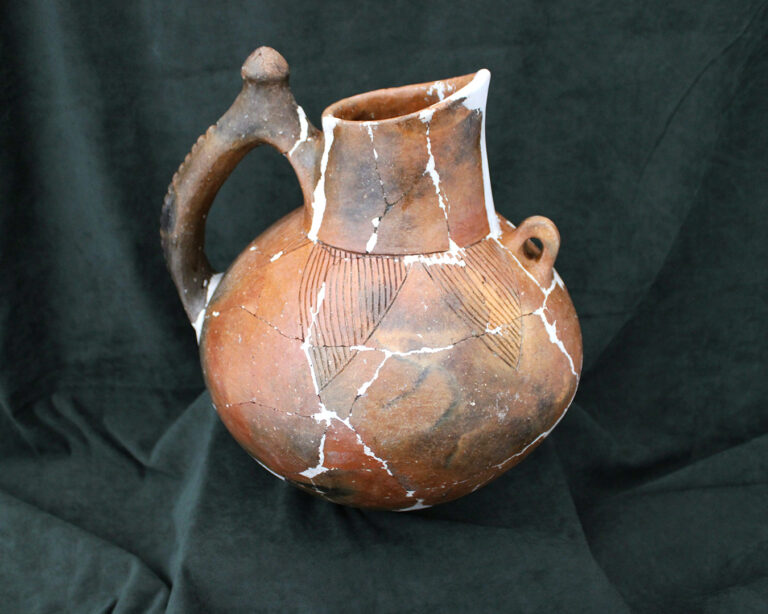
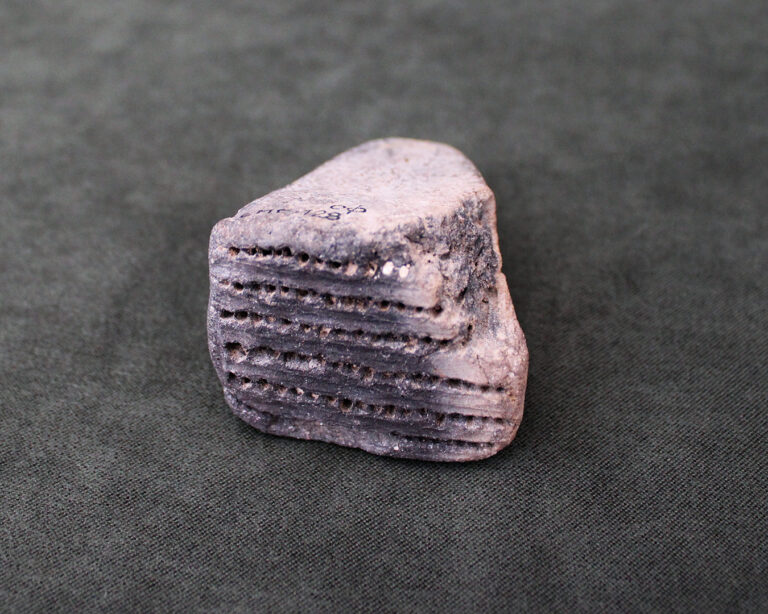
The settlement mound near Galabovo is the largest in the valleys of Sazliika, Ovcharitsa and Sokolitsa rivers. The population had developed trade relations with the western Black Sea, Anatolia, and the northern coast of the Aegean Sea.
Iron Age
Human sacrifices Gledachevo
1100/1000 BC – 1st c. BC
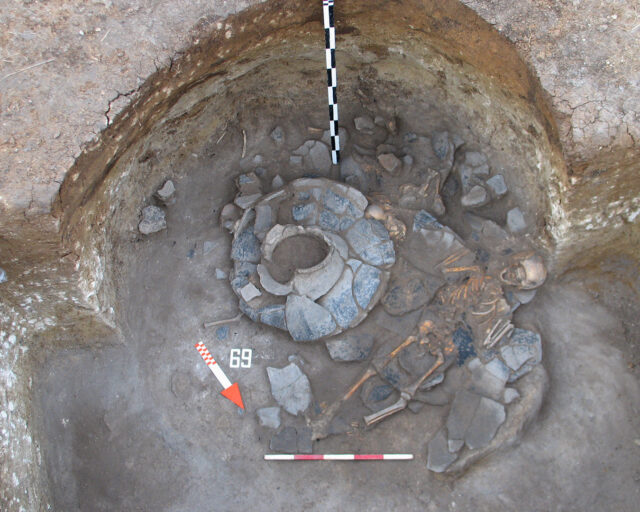
Some pits with sacrifices have been found in some of the studied sites near the village of Gledachevo. Among them are the skeleton of a 16–year–old girl in a sacrificial position, a man about 25 years old, an 8–year–old child, a man between 25–40 years old, a child aged 1.5–2 years and a horse, the most revered animal in the religious tradition of the Thracians.
Iron Age
Ovchartsi Soldzhaka
1100/1000 BC – 1st c. BC
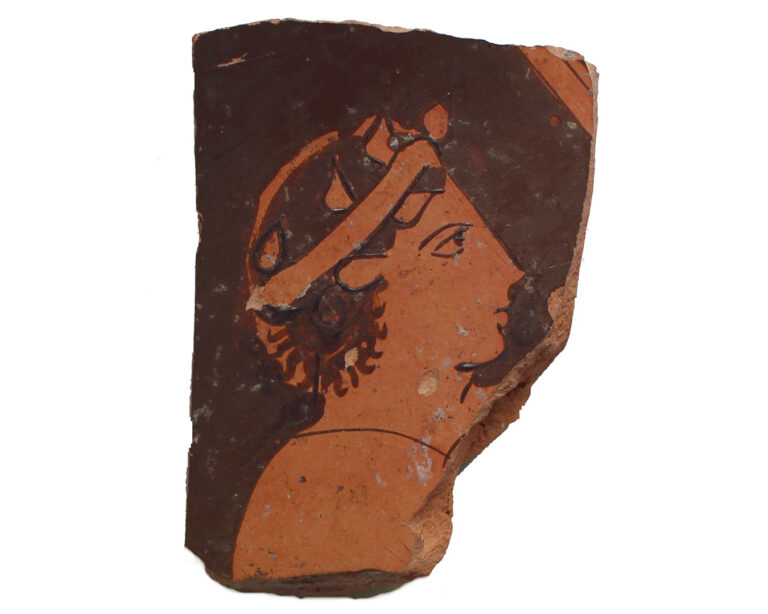
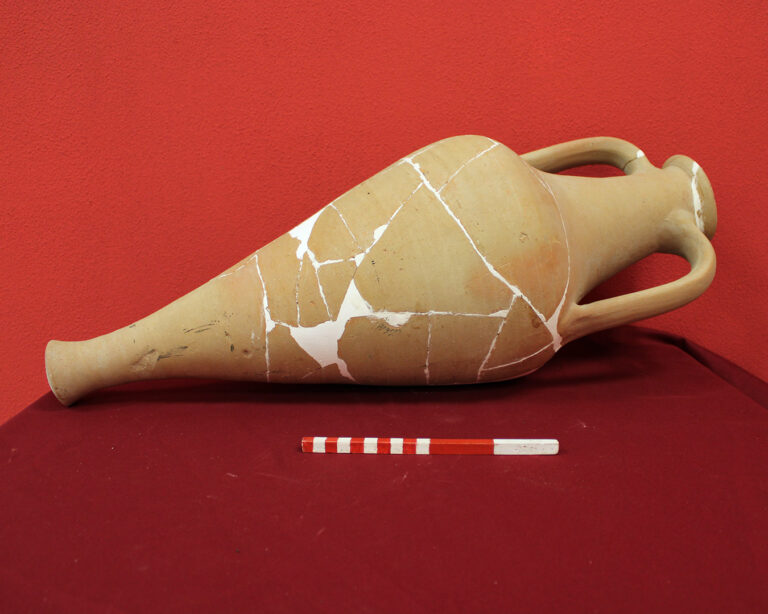
The site is located in the territory of the former village of Ovchartsi. In some pits, animal skeletons as well as human remains have been found. Among the archaeological materials, there are fragments of ceramic vessels, tools, pieces of plaster, fireplaces, quern-stones, domestic and game animal bones.
Roman era
1st – 2nd c. AD
Golyamata mogila barrow Madrets
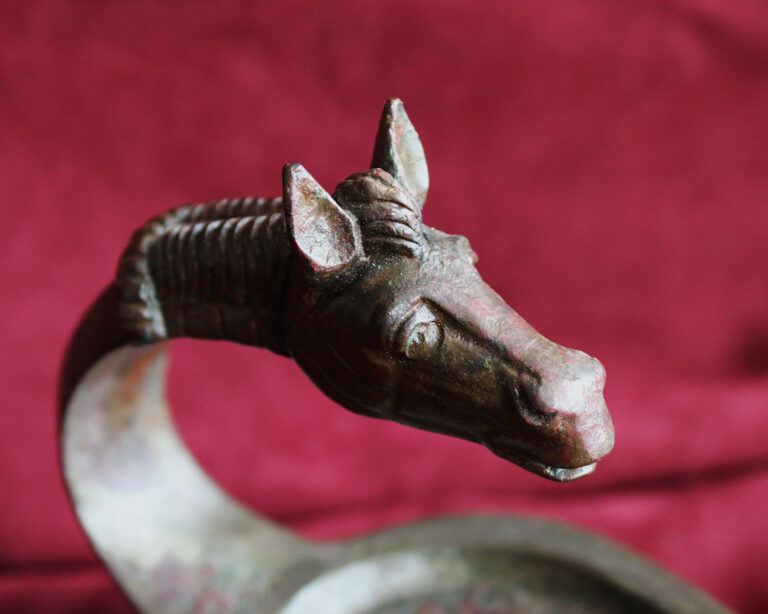
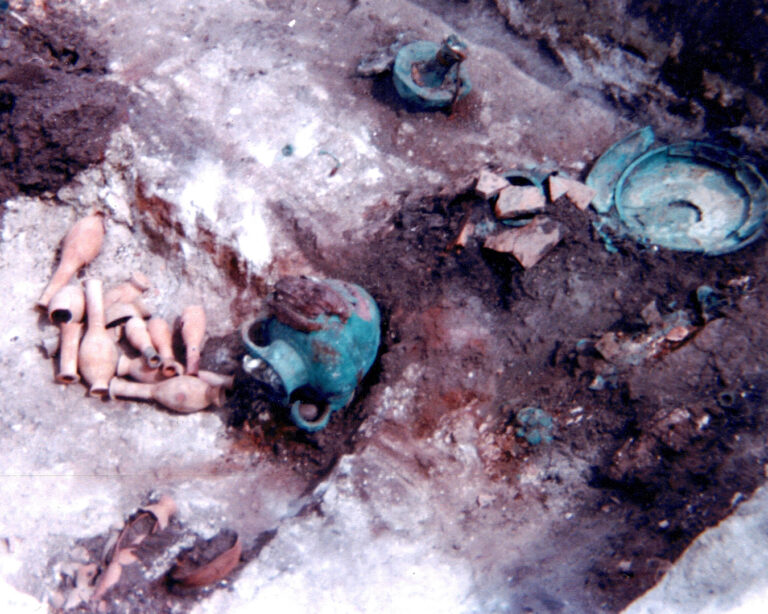
The large mound near the village of Madrets is the most representative mound in the area. A rich grave has been excavated within it, where the individual was cremated on site on a wooden bed.
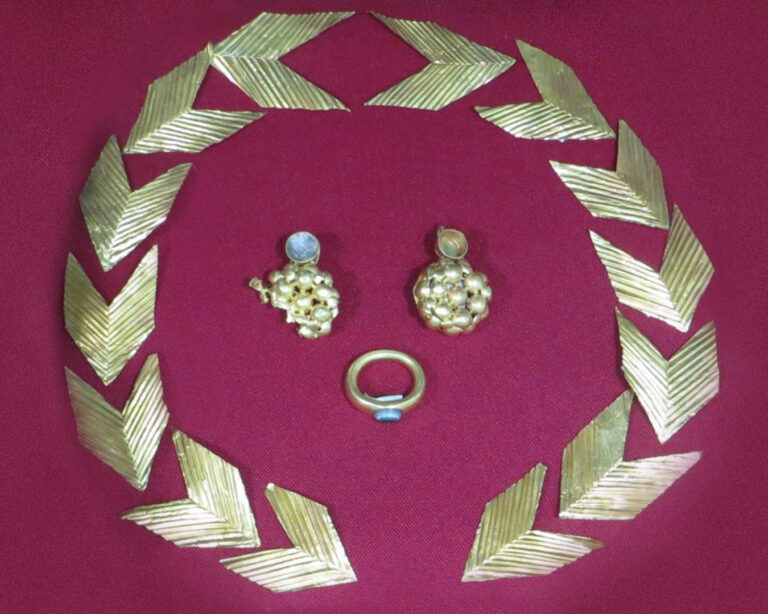
Luxury jewelry and vessels made of gold, silver, bronze, and glass indicate that the buried person was wealthy and of a high status in society.
2nd c. AD
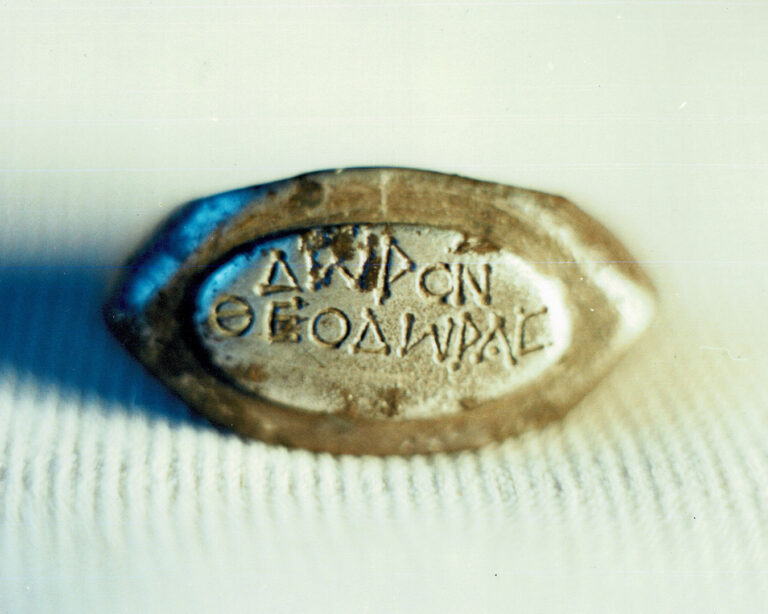
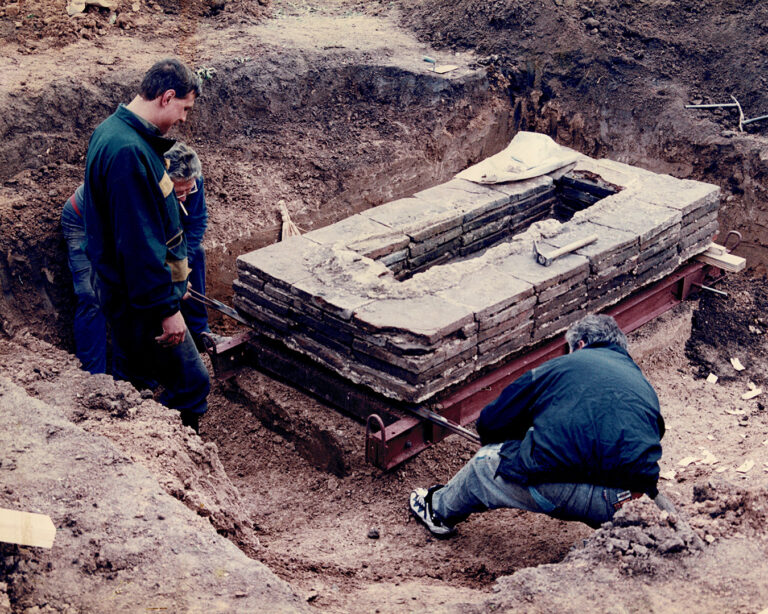
Theodora’s Burial
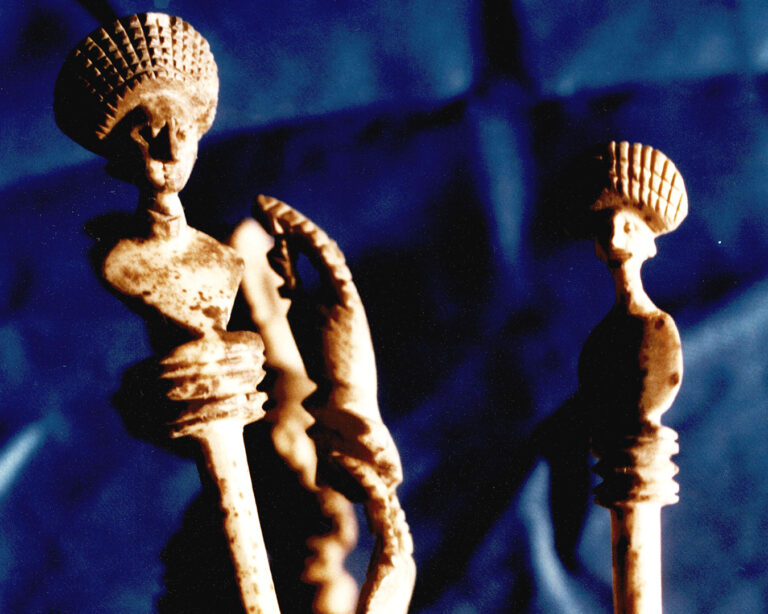
You can see the tomb of Theodora in its authentic state in the museum. The burial chamber has been lifted and moved to one of the halls.
How did archaeologists discover the name of the noble maiden who was burnt and buried in the grave?
Late Roman period
4th – 6th c. AD
Sarmatian-Alan necropolis
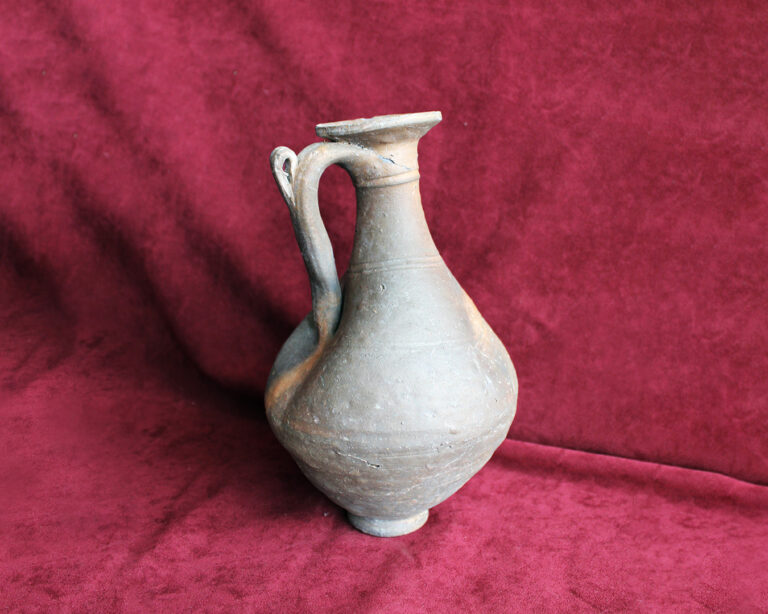
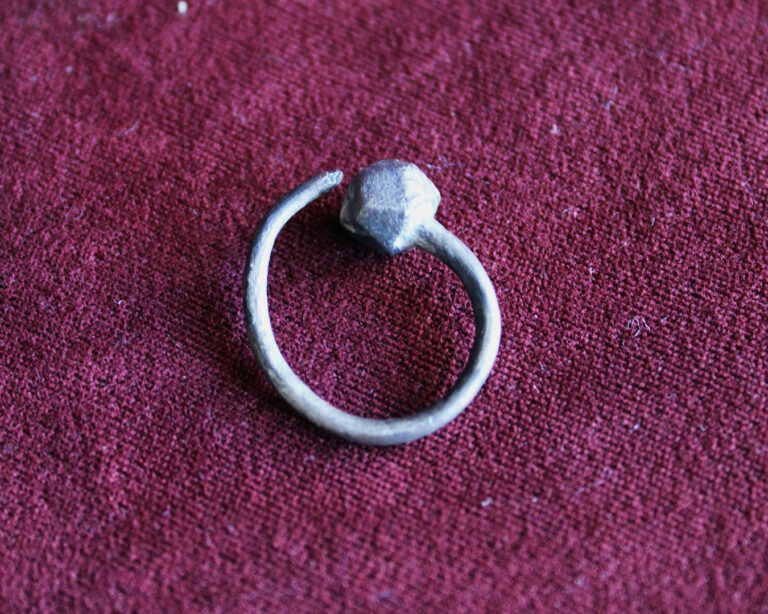
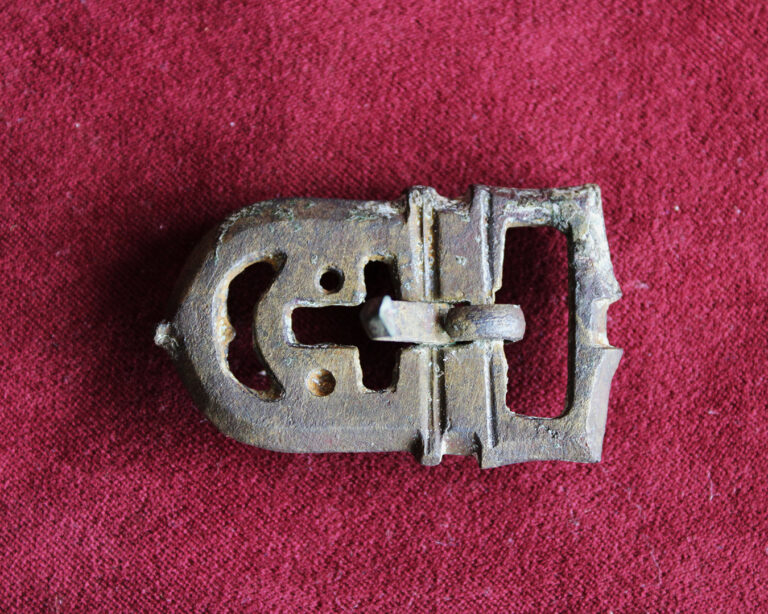
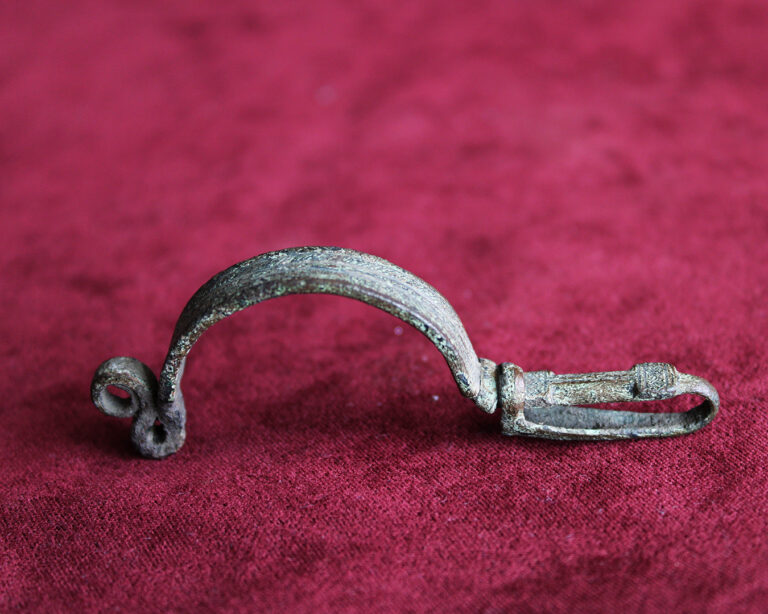
In the area “Selishte” near the village of Polski Gradets, three early Christian basilicas have been excavated, located one on top of the other, along with a catacomb grave.
The burial rite is contrary to Christian canons and is associated with the culture of the so-called Sarmatian-Alans, who during this period were federates of the Byzantine Empire.
Their presence in Southern Bulgaria is recorded very rarely, as they usually guard the northern border of the Empire.
5th – 6th c. AD
Znamenosets Fortress
The fortress is located in “Alekov bair” locality 7 km away from the town of Radnevo, nearby the village of Znamenosets. Its location was strategically chosen – it was adjacent to a main road, and it had visibility toward the nearby fortresses in the region.
The fortress was probably built by emperor Justinian I (527-565) and it functioned for a brief period of about 60 years.
It was destroyed most likely during the Slavic-Avar invasions at the end of the 6th c.
Middle Ages
7th c.
Gledachevo grave
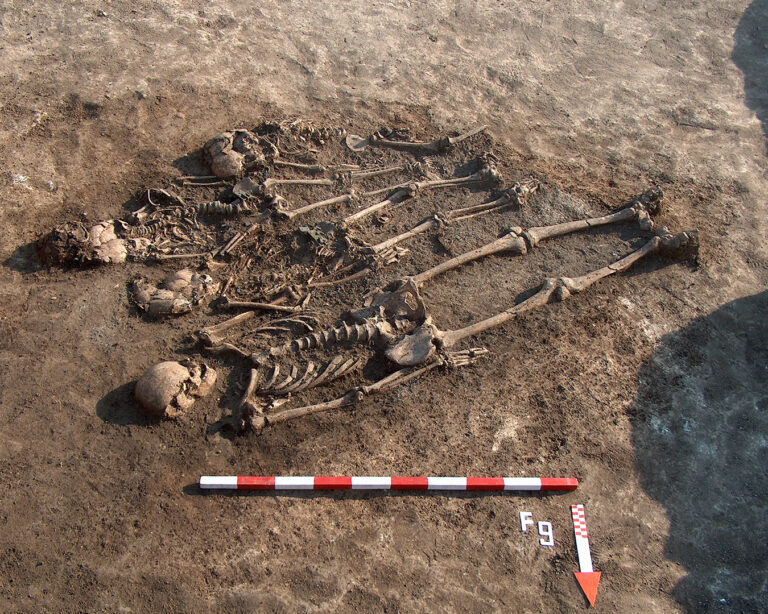
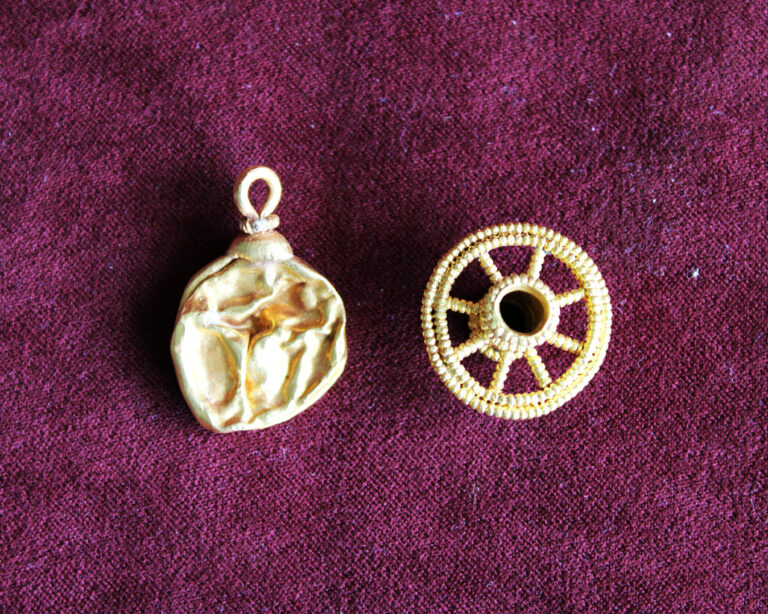
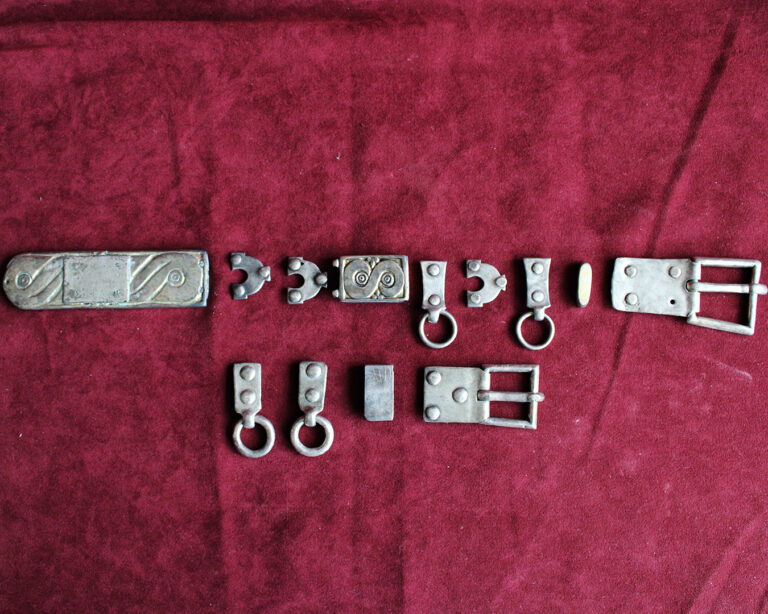
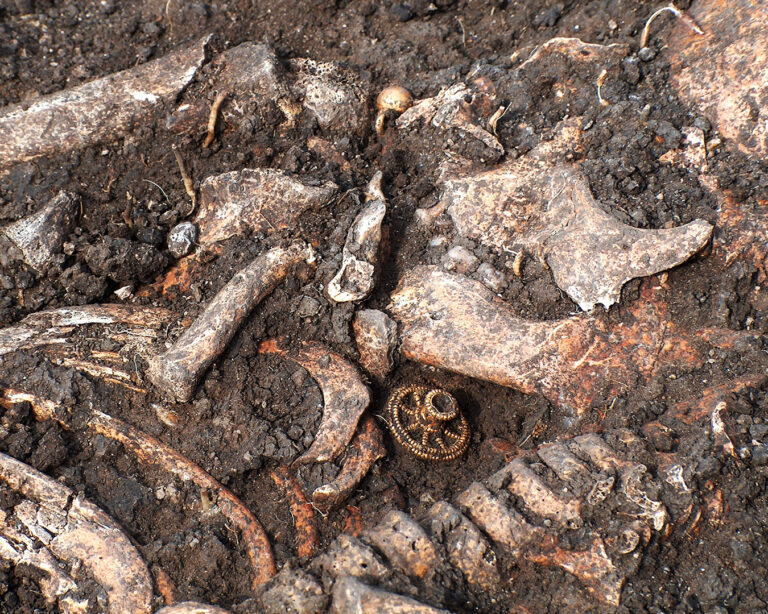
A young man and three children with impressive burial gifts and personal belongings were buried in this mass nomadic grave.
The burial facility dated in the end of the 7th – the beginning of the 8th c. and it is similar to the burial complexes of the so-called Kuber’s Bulgarians and to present-day North-Eastern Bulgarian sites, Targshor in the Wallachian plain, Malaya Pereshchepina in present-day Ukraine, etc.
Are the buried the ancestors of the Bulgarians or their ethnicity should be attributed to another nomadic people?
11th – 12th c.
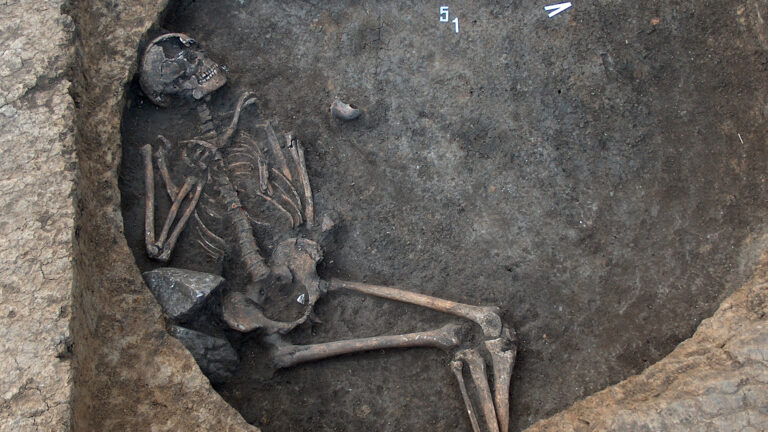
Pecheneg burials
Тraces of the so-called “late nomads” are scarce in Southern Bulgaria.
They were laid in embryonic position in round burial pits and the grave was usually piled with stones.
Find out what animals the Pechenegs were buried with.
12th – beginning of 13th c.
Znamenosets Gerena
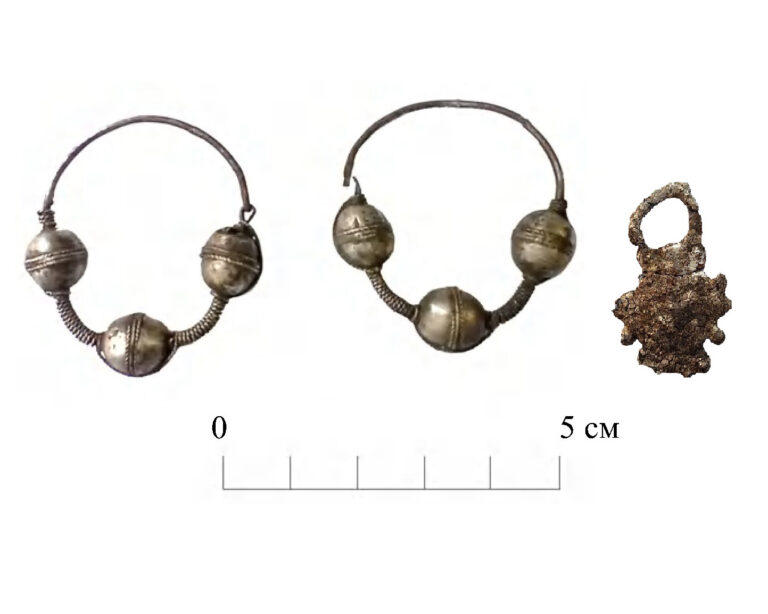
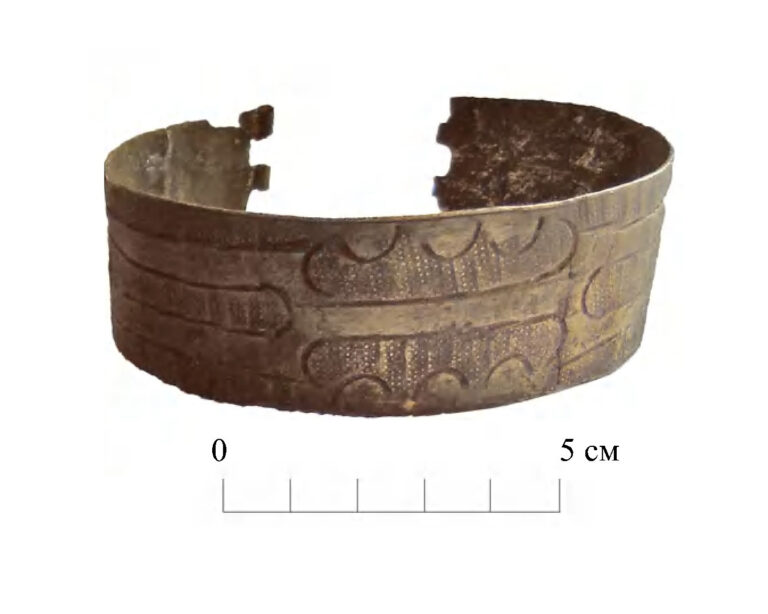
The medieval settlement is situated in Gerena locality. Numerous residential and farm buildings were excavated. The roof of some of the houses was laid with tiles, which was uncommon for the medieval settlements of that type.
The necropolis of the settlement was registered nearby and a total number of 550 graves have been studied to this day.
What else did the archaeologists discovered about the life of these medieval inhabitants?
Modern Era
19th – 20th c.
Ethnography
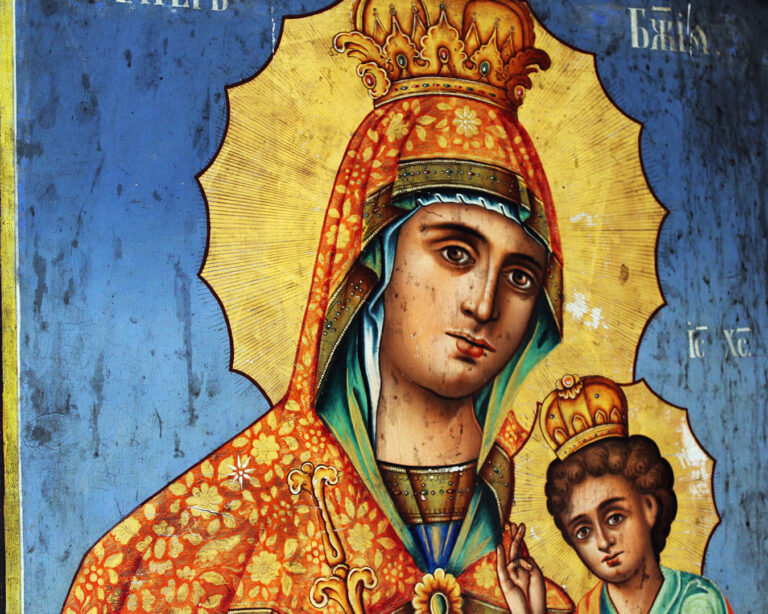
Recently the museum has founded a new ethnographic collection in a new exhibition room where a small quantity of ethnographic materials has been arranged – ceramic vessels, traditional dresses, agricultural tools, etc. The objects were donated to the museum by local people.
19th – 20th c.
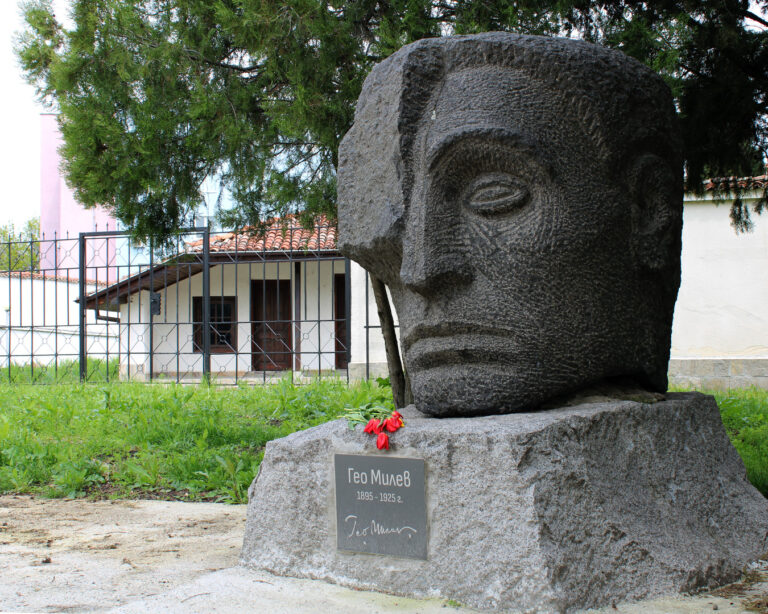
Geo Milev’s House
The great poet Geo Milev was born in Radnevo. Currently, his house is not open to the visitors.
What do you need to know about his life and home?
Today
20th – 21st c.
The Museum
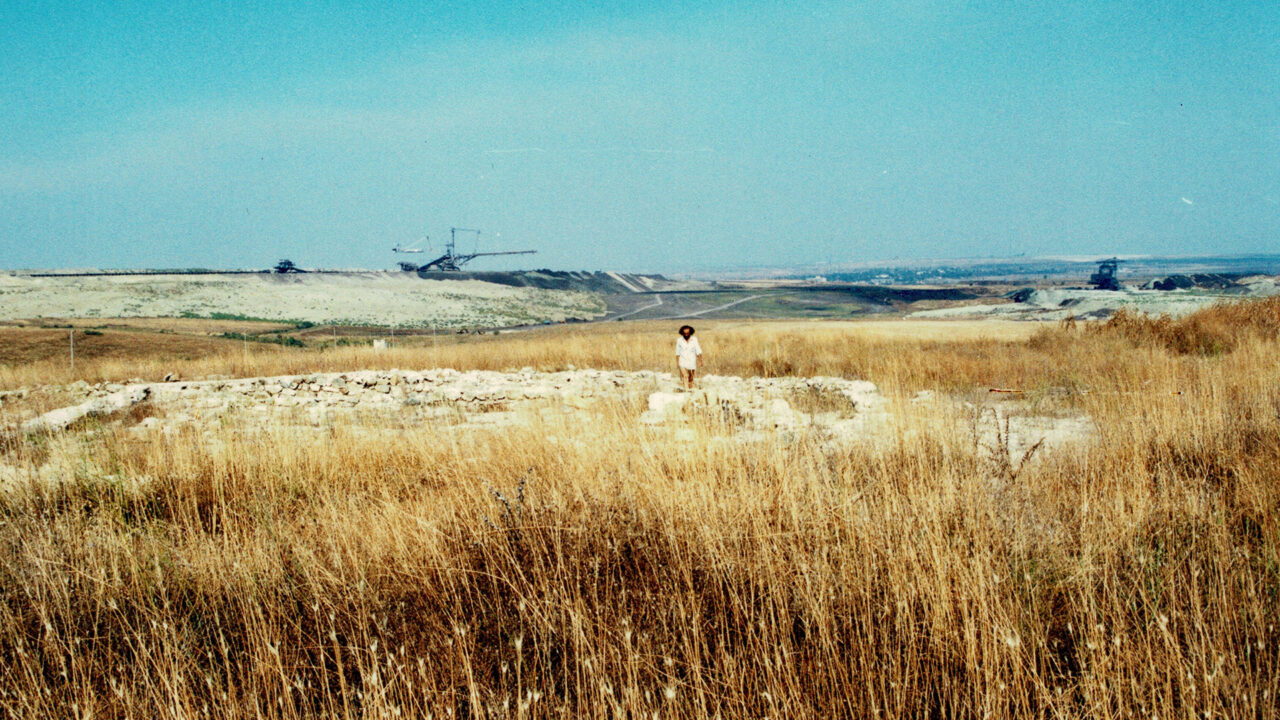
Archaeological Museum “Maritsa-iztok” was established due to the coal mine that operates on the territory of the municipalities of Radnevo and Galabovo.
How did the coal mining lead to the establishment of the museum that you are visiting today?
In the restorers’ studio
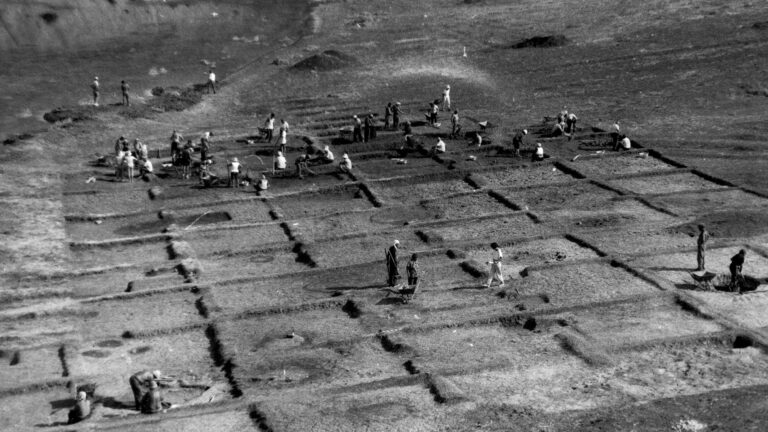
As a result of the intensive archaeological excavations of sites, hundreds of artefacts are being added annually to the museum depository. Most of them undergo conservation and restoration in the specially equipped studio of the museum.
What is being restored and who are the restorers?
Welcome to the museum!
Explore the halls and find out more about the region and its rich history here. We wish you a pleasant visit!

The project is funded by NCF“Digital window towards Archaeological Museum
“Maritsa-iztok” Radnevo”
2025
Design by
Studio SFERA, part of
RISK Electronics Ltd.
RISK Electronics Ltd.

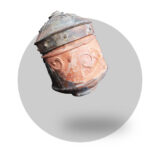


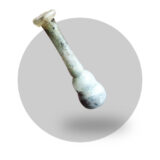 A glass container, like a miniature bottle or ampule, intended for the tears of the mourners.
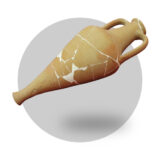
 A glass or ceramic vessels, like a bottle, intended for fragrant oils and liquids, usually put in Roman burials.
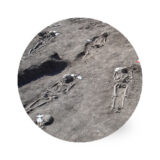 Cemetery, graveyard.
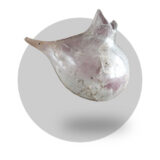
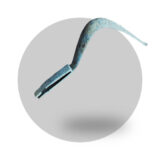
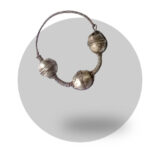 A jewelry like an earring which is larger in size and usually it was attached to the headscarf or the hair of the woman.