
New Stone Age
NEOLITHIC PERIOD
6300/6200 BC - 4900/4850 BC

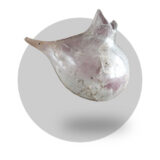
Ceramic pot. Neolithic period.
Ceramic pot. Neolithic period.
Neolithic period
At the beginning of the Neolithic period (the seventh millennium BC) on the territory of present-day Bulgaria new population arrived and settled, who brought the knowledge of agriculture and pottery making. It is suggested that it marked the beginning of the neolithization of the Balkan peninsula.
Gradually the new population settled in the most fertile and easy to reach regions, mainly along the largest rivers like Struma, Mesta, Maritsa and their valleys. The settlements grew in population and in number and there also were indications for distant cultural and trade relationships with Anatolia and the North Aegean coast.
The ceramic complexes and the material assemblages on the Balkan peninsula have shown regional differences and division of the population. According to scientists, these differences define individual cultural groups. During the Late Neolithic period the frontiers of these cultures opened, and the population consolidated and formed huge cultural blocks.
The settlement mound near the village of Karanovo is 12 m high. It was accumulated by the continuous habitation in the settlements, located one above the other, from the beginning of the Neolithic to the Early Bronze Age. This allowed the establishment of Karanovo chronological system.
What do researchers discover?
The earliest settlements that had existed on the territory of the Mines date from the Early Neolithic Period. Such material remains were found at the base of some settlement mounds accumulated during the next stages of the Neolithic period, Chalcolithic period and the Bronze Age with some interruptions and differences in life continuity. As of today, there are a couple of localized settlements along the Sokolitsa river – the settlement mound of Kliselika, and the ones near the villages of Madrets and Kovach which are synchronous with the Early Neolithic Karanovo I Culture. Nearby the village of Mednikarovo there was a settlement that emerged and developed during the Early, Middle and Late Neolithic Periods –Karanovo II, III, IVa Cultures. The Late Neolithic period was synchronous to Karanovo III-IV and Karanovo IV Cultures and it was attested in settlements near Obruchishte and Sarnevo. All of them were inhabited for a short period of time.

The project is funded by NCF“Digital window towards Archaeological Museum
“Maritsa-iztok” Radnevo”
2025
Design by
Studio SFERA, part of
RISK Electronics Ltd.
RISK Electronics Ltd.





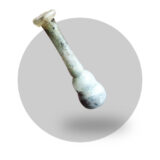 A glass container, like a miniature bottle or ampule, intended for the tears of the mourners.
 A glass or ceramic vessels, like a bottle, intended for fragrant oils and liquids, usually put in Roman burials.
 Cemetery, graveyard.
 A jewelry like an earring which is larger in size and usually it was attached to the headscarf or the hair of the woman.