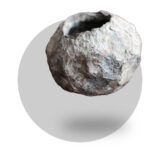
Pecheneg burials
Pecheneg nomadic burials
During the 11th-12th c. present-day Bulgarian lands were afflicted by the late nomadic invasions of Pechenegs, Uzi and Cumans.
According to historical sources there were several waves which caused great damage to the settlement network in the region.
Sometimes the Byzantine Empire used the nomads as federates and later the restored Second Bulgarian State frequently used Cuman help in battles.
Gradually the nomads settled, and they were baptized as Christians and were melted down in the common mass of people in the Byzantine and Bulgarian empires.
Their presence was also registered on the territory of the Mines. Several burial facilities, typical for the nomadic culture which also opposed the Christian traditions, were studied in the region.
Usually, human individuals were buried in round burial pits in hocker position or laid on their side. Sometimes there were dog’s or horse’s skeletons as well, and the grave pits were finally piled with stones. Such graves were archaeologically attested and investigated near the villages of Mednikarovo, Gledachevo and Ovchartsi.
A typical nomadic mace was found in the medieval settlement near Znamenosets.

Nomad burial facility, Gledachevo
Nomad burial facility, Gledachevo
Burial inventory, Gledachevo
Agricultural tools
Nomad burial facility, Ovchartsi

The project is funded by NCF“Digital window towards Archaeological Museum
“Maritsa-iztok” Radnevo”
2025
Design by
Studio SFERA, part of
RISK Electronics Ltd.
RISK Electronics Ltd.
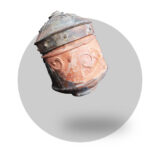




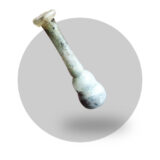 A glass container, like a miniature bottle or ampule, intended for the tears of the mourners.
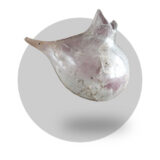
 A glass or ceramic vessels, like a bottle, intended for fragrant oils and liquids, usually put in Roman burials.
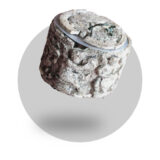
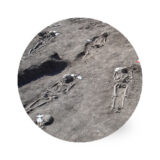 Cemetery, graveyard.
 A jewelry like an earring which is larger in size and usually it was attached to the headscarf or the hair of the woman.